Article: Scalp Oiling Guide for Softer, Healthier-Looking Hair
Scalp Oiling Guide for Softer, Healthier-Looking Hair
A good scalp oiling guide should make the ritual feel simpler, not leave you wondering why your roots look greasy by lunchtime. Done thoughtfully, scalp oiling can be a comforting way to soften dryness, ease that tight post-shampoo feeling and give your hair a smoother, healthier-looking finish. The key is using the right amount for your scalp, not the biggest amount your hair can absorb.
For many of us, hair care is squeezed between school runs, work and the next wash day. A five-minute oil massage before a shower can still be enough to make the ritual feel restorative. It is a small pause for your scalp, your hair and you.
What scalp oiling can - and cannot - do
Scalp oiling adds lubrication to the skin and can help reduce the feeling of dryness or flaking caused by a dry scalp. The massage itself may feel wonderfully relaxing, while oil through the mid-lengths and ends can improve slip and temporarily boost shine. If your hair is curly, textured, coloured or regularly heat-styled, a pre-wash oil treatment can also make detangling feel gentler.
It is not, however, a cure for every scalp concern. Dandruff is often linked to an overgrowth of yeast, and heavy oiling can make some people’s flakes or itch worse. Hair loss can have many causes, including hormones, stress, nutritional deficiencies and scalp conditions. Oil is a lovely care ritual, but it cannot replace advice from a GP, dermatologist or qualified health professional when you have sudden shedding, pain, sores, thick scale or persistent irritation.
The most useful approach is to notice how your own scalp responds. Comfortable and soft after washing? Keep going. Itchy, congested or flat at the roots? Use less oil, leave it on for less time, or oil only the lengths.
Choose an oil that suits your scalp and hair
There is no single best oil for everyone. Fine hair and oil-prone roots usually do better with a light touch and a shorter treatment. Dry, coarse or curly hair may enjoy a richer oil applied from scalp to ends. If your main concern is brittle ends rather than scalp dryness, keep the oil below your ears and skip the roots altogether.
Organic castor oil is a favourite for people who enjoy a rich, traditional hair ritual. Its thick texture makes it particularly suited to small, targeted amounts on dry areas, brows, hairlines or thirsty ends. Because it is so dense, it can feel too heavy when used neat across a fine-haired scalp. Try blending a few drops with a lighter carrier oil in your palm, or use it sparingly as a pre-wash treatment. Honest Skincare’s certified organic castor oil is a simple option for those who prefer one clean, multipurpose ingredient in their self-care cupboard.
Plain carrier oils are generally the calmest starting point. Avoid adding essential oils unless you understand proper dilution and your skin tolerates them. “Natural” does not automatically mean gentle, especially on a sensitised scalp. Fragrance and essential oils can trigger contact dermatitis for some people.
If you have eczema, psoriasis, seborrhoeic dermatitis, broken skin or a history of reactions, patch test first and speak with a health professional if symptoms are active. Apply a tiny amount to the inner arm or behind the ear, then wait 24 to 48 hours. If you notice redness, burning, bumps or itch, wash it off and do not use it on your scalp.
A simple scalp oiling guide for wash day
You do not need a complicated routine or a full bottle of oil. Start with one teaspoon in total for short to medium hair, or up to two teaspoons for long, thick hair. You can always add more to dry lengths, but removing excess oil often means shampooing twice.
Start with dry, detangled hair
Oil is easiest to place on a dry scalp before shampooing. Brush or gently detangle first so you are not tugging at knots once oil is in your hair. Part your hair down the middle, then create two or three more loose sections depending on its thickness.
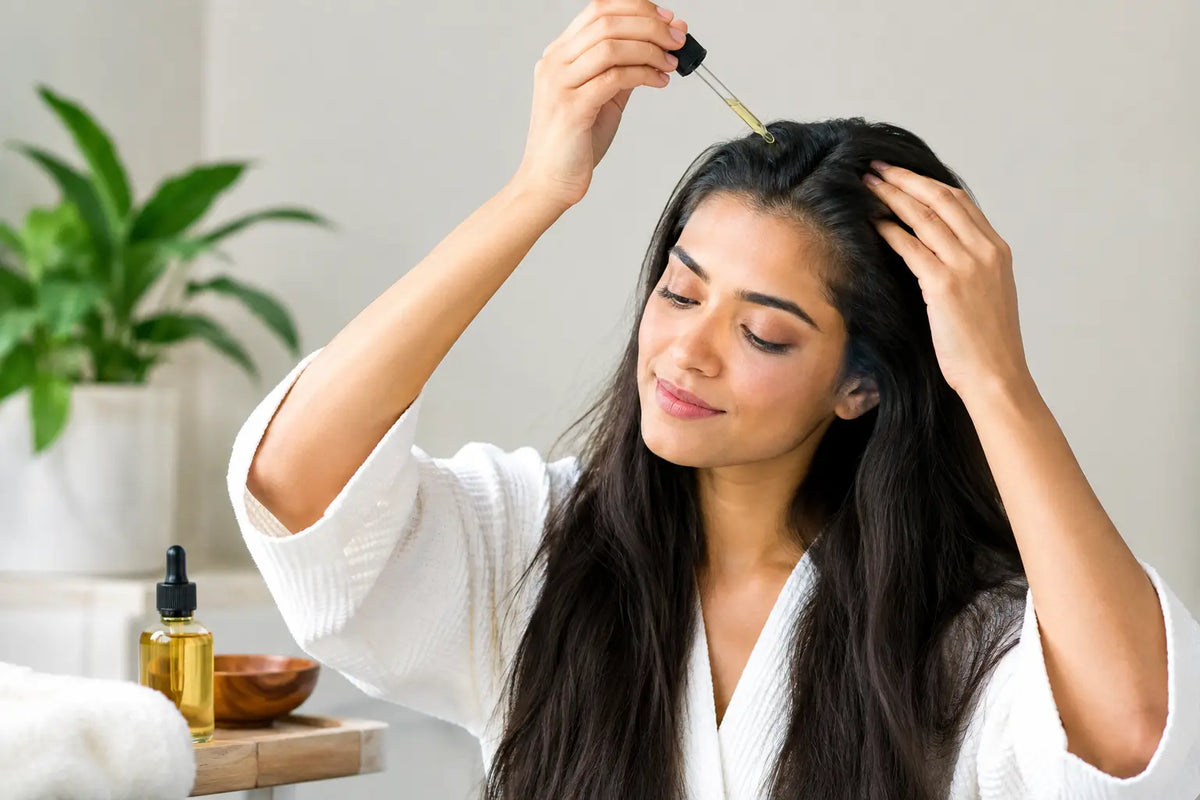
Warm the oil between your palms for a few seconds. It should feel comfortably warm from your hands, never hot. Use your fingertips to place a few drops along each part, rather than pouring oil straight onto your head. This gives you better control and helps prevent buildup around the crown.
Massage with fingertips, not nails
Use the pads of your fingers in slow, small circles. Work from the hairline towards the crown, then behind the ears and down to the nape. Keep pressure light to medium. A good scalp massage should feel soothing, not like you are scrubbing a pan.
Spend two to five minutes here. This is where the ritual earns its place: breathe slowly, unclench your jaw and let the movement feel like care rather than another job to tick off. If your scalp is tender, skip massage and simply smooth a small amount over the hair lengths instead.
Give it a little time, then wash thoroughly
For your first few treatments, leave the oil on for 20 to 60 minutes before washing. This is long enough for a nourishing pre-wash ritual without making your pillowcase part of the experiment. Overnight oiling works for some hair types, but it is not necessary and can be too occlusive for an oily or flaky scalp.
Shampoo the scalp carefully with lukewarm water, focusing on the roots rather than piling hair on top of your head. You may need a second gentle shampoo if you have used castor oil or a generous amount through the lengths. Follow with conditioner from mid-lengths to ends, then rinse well. Hair should feel soft, not coated.
How often should you oil your scalp?
Once a week is a practical starting point for most people. If your scalp is very dry and your hair responds well, you may prefer twice weekly. Fine hair, oily roots or recurring dandruff may be happier with a light treatment every fortnight, or with oil reserved for the ends.
Frequency matters less than the result after you wash. If your hair dries with bounce and your scalp feels settled, your routine is probably in a good place. If your roots remain slick, your wash takes longer or you are seeing more flakes, scale it back.
Hair porosity, styling habits, weather and water temperature can all affect the result. Auckland humidity may leave some hair types feeling coated more quickly, while winter heating can make lengths feel dry. Let the season and your wash-day experience guide you rather than following a rigid rule.
Common scalp oiling mistakes to avoid
Using too much is the most common issue. More oil does not equal more nourishment, and overdoing it can leave roots limp or require harsh cleansing. Start small and build only where your hair needs it.
The next is applying oil over product buildup. Dry shampoo, hairspray, sweat and styling cream can sit on the scalp and make an oil treatment feel less fresh. If you rely on styling products, keep oiling to just before a thorough wash rather than layering it onto day-three hair.
Finally, do not ignore discomfort. Tingling is not a sign that an oil is working. Burning, increased itch, redness or worsening flakes are reasons to rinse, simplify your routine and seek advice if the problem continues.
The best hair rituals are the ones you can actually keep. Choose an oil you enjoy using, apply less than you think you need, and give yourself those quiet few minutes of massage before your next wash. Over time, that gentle consistency can make caring for your hair feel less like maintenance and more like a moment that belongs to you.