Rosemary Hair Oil for a Healthier Scalp
A few quiet minutes massaging revitalising rosemary hair oil into your scalp can turn hair care from another task into a genuinely restorative ritual. The appeal is easy to understand: rosemary has a fresh herbal scent, a long history in traditional beauty care, and feels especially good when your scalp is dry, tight or in need of a little attention.
Still, natural does not automatically mean suitable for everyone or effective overnight. The best results tend to come from a gentle, consistent routine, a properly diluted oil blend and realistic expectations about what scalp care can do.
What rosemary hair oil can support
Rosemary essential oil is commonly blended into a carrier oil and used as a scalp treatment. It is valued for its aromatic, warming quality and for the way massage can help spread oil across the scalp and hair roots. For many people, that combination makes the scalp feel more comfortable and cared for, particularly during colder months, after frequent heat styling, or when hair feels dry through the lengths.
There is also growing interest in rosemary for hair density and shedding. A small amount of research suggests rosemary oil may have a place in supporting hair growth for some people when used consistently over several months. That is promising, but it is not a guarantee. Hair shedding can be linked to stress, illness, hormonal changes, nutritional deficiencies, tight hairstyles, medication, genetic pattern hair loss and scalp conditions. Oil alone cannot address every cause.
Think of rosemary oil as a supportive part of a wider hair and scalp routine rather than a quick fix. It may help you create a regular scalp massage habit, reduce the urge to over-wash dry hair, and give your roots a moment of nourishing care.
Why dilution matters
Rosemary essential oil is concentrated. It should not be applied neat to the scalp, even if your skin is usually resilient. Undiluted essential oils can cause burning, redness, itching or a delayed rash, and a sensitised scalp is unlikely to feel better after more treatment.
A carrier oil makes rosemary easier and safer to use. Organic castor oil is a popular choice for a richer treatment because it has a thick, glossy texture that coats the hair beautifully. Its weight can be ideal for dry, coarse or curly hair, though it may feel too heavy for very fine hair or an oily scalp. In that case, blending a small amount of castor oil with a lighter oil can make application easier.
For a simple home blend, use 1 to 2 drops of rosemary essential oil per tablespoon of carrier oil. Start at the lower end, especially if you are new to essential oils. Mix only what you plan to use within a few weeks and keep it in a clean, dark glass bottle away from heat and sunlight.
Patch test before your first use
Even beautifully simple ingredients can cause a reaction. Apply a small amount of your diluted blend to the inner arm or behind the ear, then wait 24 to 48 hours. Do not use it on your scalp if you notice stinging, redness, swelling, hives or itchiness.
It is also wise to check with a qualified health professional before using essential oils during pregnancy or breastfeeding, for children, or if you have a medical condition, are taking medication or have a diagnosed scalp concern. If you have eczema, psoriasis, dermatitis or broken skin on the scalp, seek individual advice first rather than experimenting through a flare-up.
How to use rosemary hair oil at home
You do not need a complicated routine or a shelf full of products. Once or twice a week is plenty for most people, particularly when using a richer carrier oil.
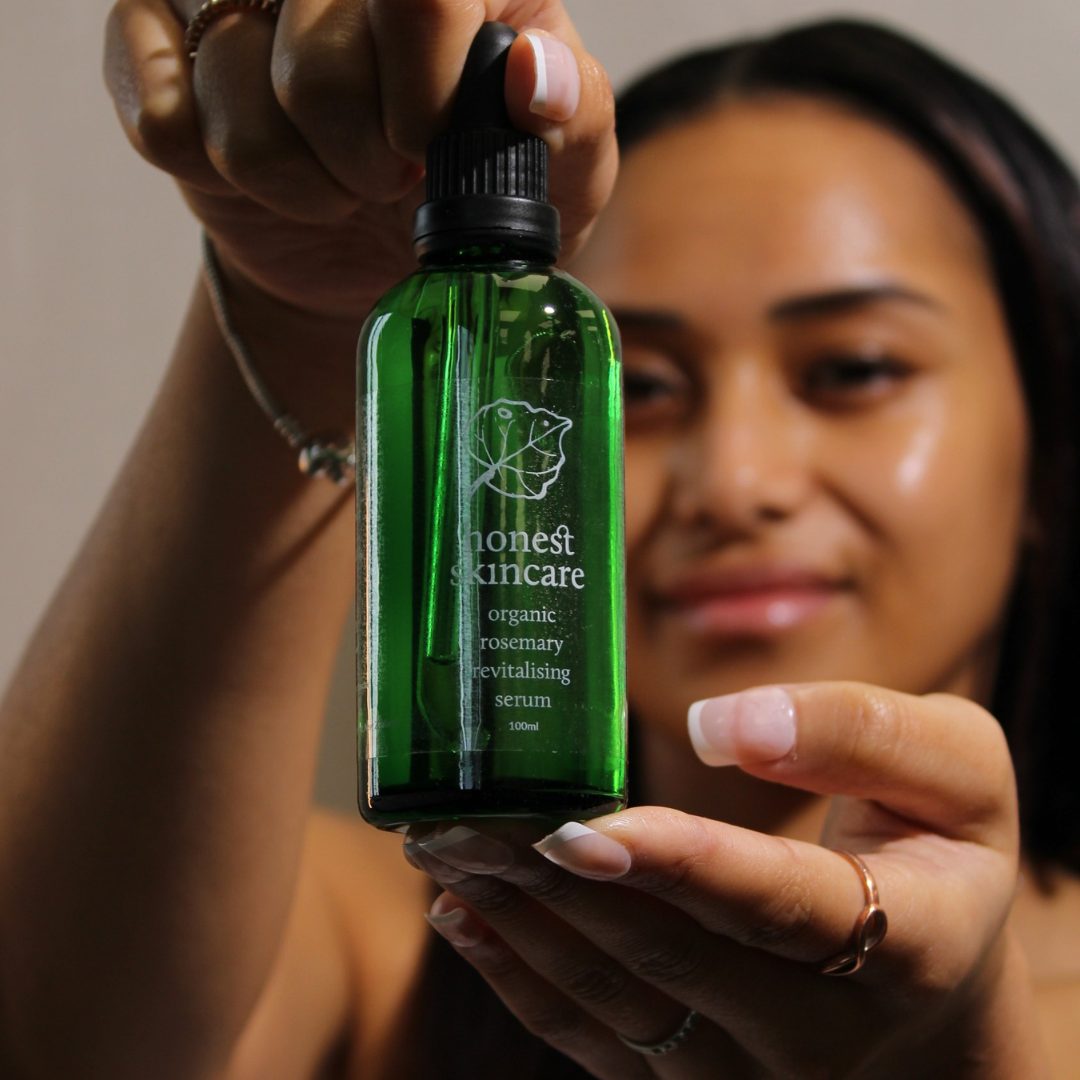
Start with dry hair, or slightly damp hair if that is more comfortable. Section your hair with your fingers and apply a small amount of revitalising rosemary hair serum oil directly along the parts rather than pouring it over the whole head. Focus on the scalp first, then smooth any remaining oil through dry ends.
Use the pads of your fingertips, not your nails, to massage in small circles for three to five minutes. Keep the pressure gentle. A scalp massage should feel relaxing, never sore or scratchy. This step is as worthwhile as the oil itself: it encourages you to slow down, notice any tenderness or flaking, and give the product even coverage.
Leave the treatment on for 30 minutes before shampooing. If your hair tolerates oil well, you may prefer an overnight treatment, protecting your pillowcase with a hair towel for castor oil. For fine hair, dandruff-prone scalps or anyone who finds oil difficult to wash out, a shorter treatment is usually the better choice.
Shampoo thoroughly, concentrating the first cleanse on the scalp. You may need a second wash, especially with castor oil. Follow with conditioner through the mid-lengths and ends if needed. After washing, your hair should feel soft and clean, not coated or limp. If it does feel heavy, use less oil next time or shorten the leave-in time.
Choose your routine based on your hair type
A nourishing oil treatment is not one-size-fits-all. Dry, textured or colour-treated hair often welcomes a richer blend and a longer pre-wash treatment. Fine hair usually benefits from just a few drops placed carefully at the roots, with the rest kept for the ends.
If you have an oily scalp, rosemary oil may still fit your routine, but restraint matters. Use a light weight oil such as revitalising rosemary hair serum, avoid overnight applications and wash it out after 20 to 30 minutes. Adding more oil to an already oily scalp will not necessarily improve balance.
For flakes, first work out whether the scalp is simply dry or whether you may be dealing with dandruff, irritation or product build-up. Oil can feel soothing on a dry scalp, but it can aggravate some forms of dandruff or seborrhoeic dermatitis. Persistent flakes, redness, thick scale or soreness are good reasons to speak with a pharmacist, GP or dermatologist.
Small habits that make a difference
Healthy-looking hair starts with what happens at the scalp, but it also depends on the way you treat the lengths every day. Avoid very tight buns and ponytails, minimise high-heat styling where possible, and use a gentle shampoo that does not leave your scalp feeling stripped. Regular trims can help keep dry ends from travelling upwards and making hair look thinner than it is.
Be patient with any hair-focused ritual. Hair grows slowly, and shedding naturally changes across the year. Take a simple photo of your part line or hairline in the same light every month if you are trying a new routine. It is a more reliable way to notice changes than checking the mirror every morning.
If sudden hair loss, patchy loss, scalp pain or intense itching is part of the picture, do not wait for an oil treatment to solve it. Early professional advice can help identify the cause and guide you towards the right care.
A ritual worth keeping simple
The nicest rosemary hair oil routine is one you will actually enjoy doing. Keep the blend gentle, use only enough to suit your hair, and let the massage be a small pause at the end of a busy week. With thoughtful use, a good carrier oil and a little consistency, it can be a comforting way to care for your scalp and give your hair some well-earned attention.