Celtic Sea Salt Benefits: What Makes It Different?
Celtic sea salt benefits go beyond simply adding flavour to food. This traditional grey sea salt is valued for its natural mineral content, slightly moist texture and distinctive taste. Less processed than standard table salt, it’s a simple way to add great flavour to everyday meals.
Celtic sea salt is traditionally harvested from coastal salt marshes in Brittany, France, where seawater is channelled into shallow clay ponds and left to evaporate naturally in the sun and wind. The salt is then collected by hand
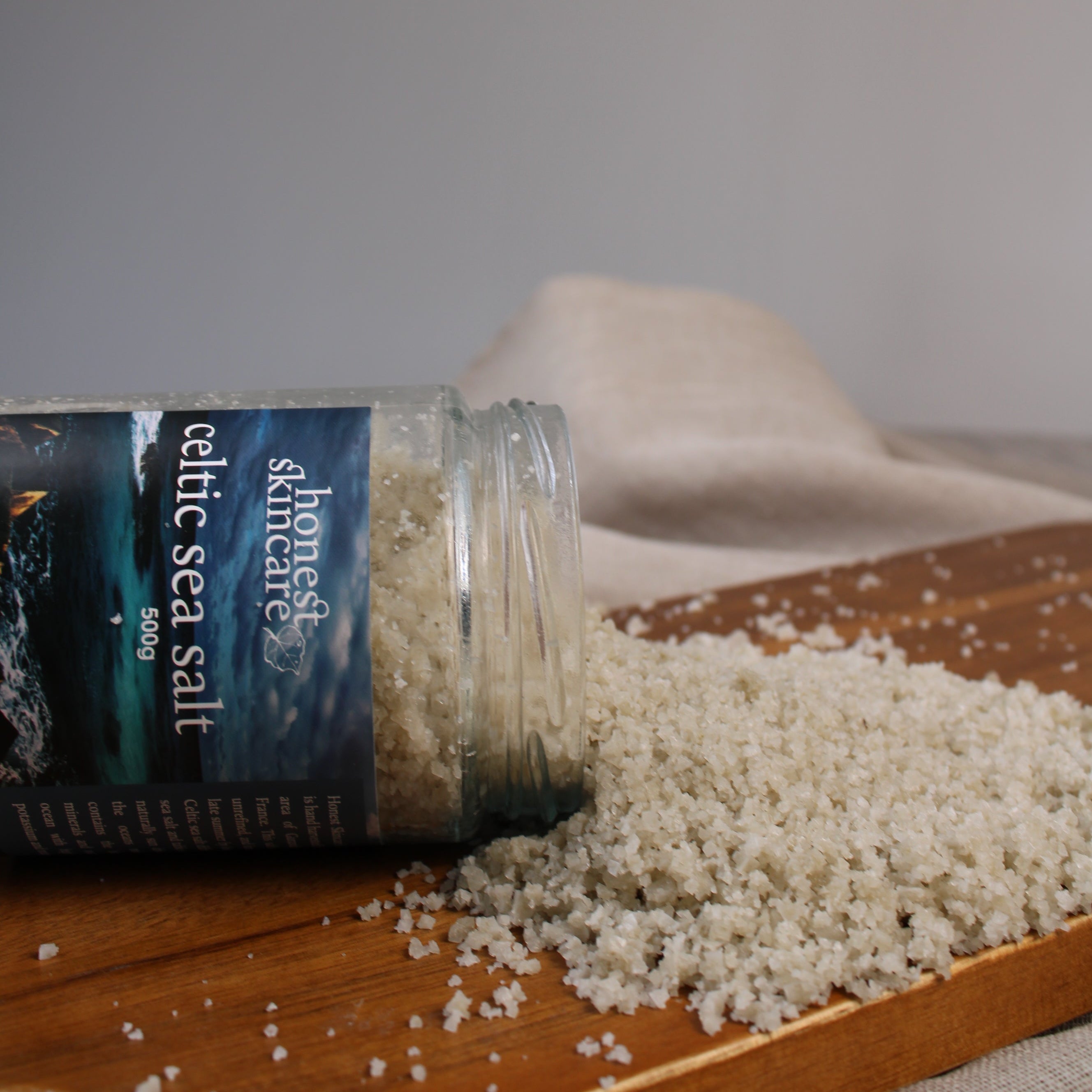
Its characteristic grey colour comes from contact with the mineral-rich clay beds, while its slightly damp texture is completely natural. It is available in both coarse and fine varieties, depending on how you prefer to use it.
What are the Celtic sea salt benefits as opposed to normal table salt?
Standard table salt is highly refined to produce fine, uniform crystals and is often treated with anti-caking agents to keep it free flowing. Many table salts also have iodine added.
Celtic sea salt is much less processed and naturally contains small amounts of minerals including magnesium, potassium and calcium. These trace minerals contribute to its distinctive character, although Celtic sea salt shouldn’t be relied upon as a significant source of dietary minerals.
The biggest difference you’ll notice is the flavour and texture. Celtic sea salt has a softer, more rounded saltiness than ordinary table salt, making it particularly good for seasoning and finishing food.
It is also worth remembering that Celtic sea salt is generally not iodised. If iodine is important in your diet, you may wish to use iodised salt as well.
Celtic Sea Salt Benefits for Everyday Cooking
One of the best things about Celtic sea salt is how versatile it is.
Fine Celtic sea salt can be used for everyday cooking, soups, sauces, marinades, vegetables, meat and baking. Coarse Celtic sea salt is particularly good as a finishing salt, where the larger crystals add both flavour and texture.
Try a small pinch over eggs, avocado, salads, roasted vegetables, grilled meat or freshly cooked potatoes. You don’t need much, so start with a little and add more if needed.
When baking or following recipes, remember that different sizes of salt crystals can affect volume measurements. A teaspoon of fine salt isn’t necessarily equivalent to a teaspoon of coarse salt.
Is Celtic Sea Salt Healthier?
One of the most talked-about celtic sea salt benefits is its naturally occurring trace mineral content. Because it undergoes less processing than standard table salt, it retains small amounts of minerals naturally present in seawater.
However, Celtic sea salt is still predominantly sodium chloride, just like other salts. Your body needs sodium for normal nerve and muscle function and fluid balance, but too much sodium can be harmful.
For this reason, Celtic sea salt is best enjoyed in moderation as part of a balanced diet. Its real appeal is its traditional harvesting method, minimal processing, natural mineral content and wonderful flavour rather than any claim that it can cure or prevent health problems.
Choosing Celtic Sea Salt
Look for genuine Celtic sea salt with a simple ingredient list and no unnecessary additives. If you want traditionally harvested salt, check where it comes from rather than relying solely on the words “Celtic-style” on the packaging.
Its naturally moist texture means it may clump slightly, which is perfectly normal. Store it in an airtight container or salt cellar away from excess moisture and heat.
For us, the appeal of Celtic sea salt is its simplicity. It’s a traditional, minimally processed ingredient that does exactly what good salt should do: bring out the natural flavour of food while offering the distinctive texture and trace minerals that make Celtic sea salt a pantry favourite.