Why BioGro Certified Skincare Products Matter
A face oil, balm or body butter can feel beautiful on the skin, but the label should feel just as reassuring. BioGro certified skincare products give ingredient-conscious shoppers a clearer way to choose, especially when you want natural care that is practical, gentle and easy to make part of your daily ritual.
For many New Zealanders, natural skincare is not about chasing a complicated 10-step routine. It is about knowing what you are applying to dry hands, a tired face, a growing baby bump or skin that needs a little extra comfort. Certification does not promise that every product will suit every person, but it does provide meaningful accountability behind organic claims.
What BioGro certified skincare products mean
BioGro is a well-known organic certification body in New Zealand. When a skincare product is BioGro certified, it has been assessed against organic standards that consider ingredients, production processes, traceability and the way the finished product is presented to customers.
That matters because words such as “natural”, “pure” and “clean” can mean different things from one brand to another. They may describe an ingredient, a brand philosophy or simply the look of a label. Organic certification brings a defined standard and independent oversight to the conversation.
For skincare, this can include checking the origin and handling of organic botanical ingredients, reviewing manufacturing practices and ensuring claims are not misleading. The exact requirements can vary according to the product type and formulation, so it is worth looking for the certification mark on the specific item rather than assuming an entire range carries the same status.
Certification is not a guarantee of instant results. Skin can react to essential oils, plant extracts and even ingredients with an excellent natural profile. What it does offer is confidence that a product’s organic positioning is supported by more than clever packaging.
Why certification is useful for everyday skin care
Our skin care routines are often built around small, repeated moments. You smooth balm over rough elbows after a shower, massage oil into your scalp before bed or reach for a simple moisturiser when cold weather leaves your face feeling tight. Over time, those choices add up.
Choosing certified organic products can be especially appealing when you are trying to reduce unnecessary exposure to ingredients you would prefer to avoid. It may also suit people who value responsible sourcing and want greater visibility over where plant-based ingredients come from.
For parents, sensitive-skin shoppers and people managing dry, reactive or stressed skin, a shorter and more transparent ingredient list can make choosing products less overwhelming. That said, “organic” and “gentle” are not interchangeable terms. A richly fragranced botanical blend may be a lovely sensory ritual for one person and too much for another.
The most useful approach is to match the product to your skin, your preferences and the area you are treating. A nourishing body oil may be perfect for legs and hands, while a simpler fragrance-free formula may be the better choice for a delicate facial area.
How to read a certified skincare label
A BioGro mark is a helpful starting point, not a reason to stop reading. Take a minute to look beyond the front label and understand what is in the jar or bottle.
Start with the full ingredient list
Ingredients are generally listed from highest to lowest concentration. This helps you see whether the product is built around oils, butters, floral waters, waxes or active botanical extracts. If you know your skin does well with kawakawa, calendula, jojoba or castor oil, you can look for those ingredients and see where they sit in the formula.
Names can appear in botanical or INCI form, which can look technical at first. With a little practice, you will begin to recognise your favourites. It is also sensible to check for ingredients you know do not agree with your skin, including particular essential oils or nut-derived oils.
Check what the certification applies to
Look for clear wording about the product’s certification rather than broad statements that could refer only to one ingredient. A product made with an organic oil is not necessarily the same as a finished certified organic skincare product.
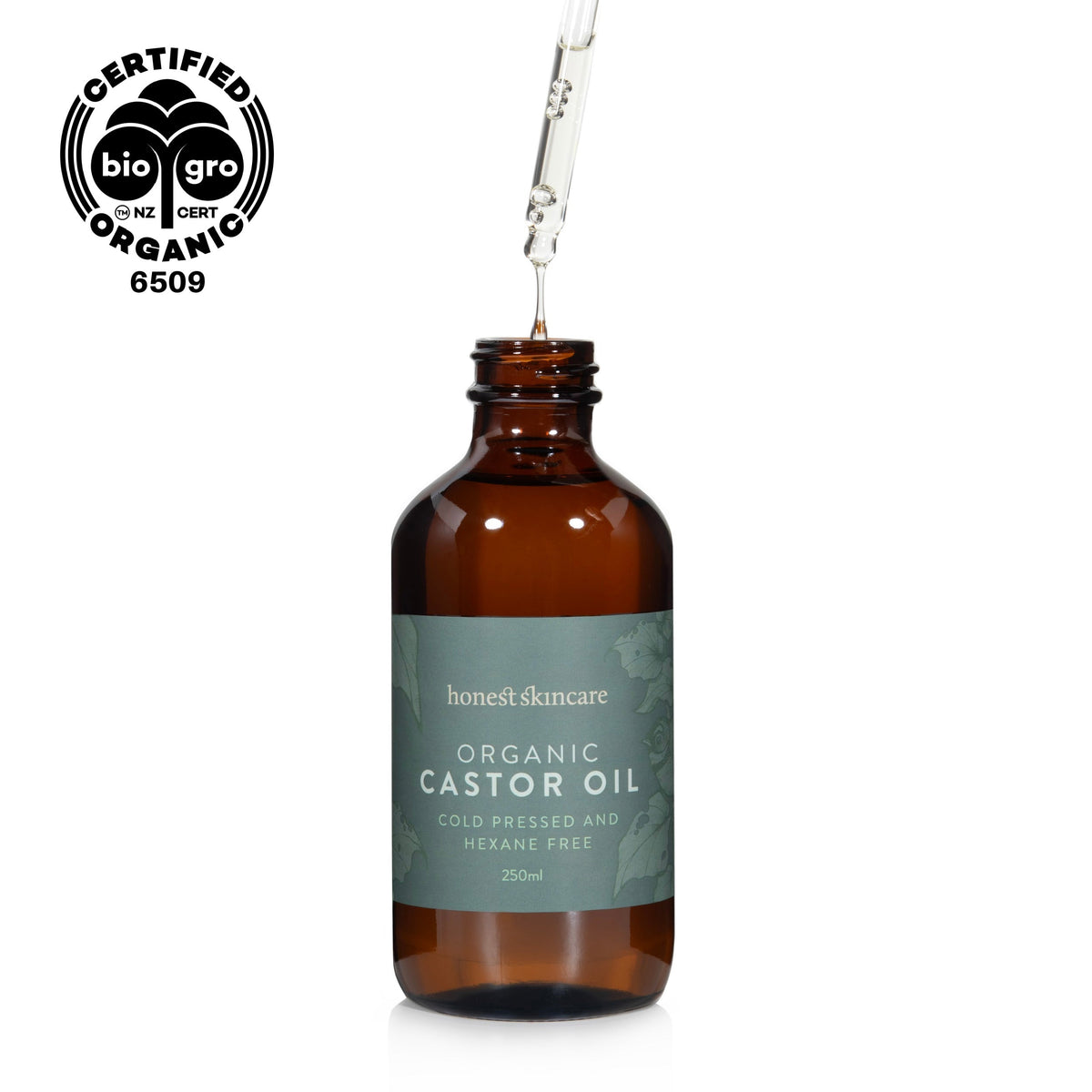
This distinction is useful with blends. A castor oil may be certified organic in its own right, while a finished balm, mask or serum has its own formulation and certification status. Honest product information should make that easy to understand.
Consider packaging and freshness
Natural oils and botanical formulas are best cared for properly. Dark glass or protective packaging can help shield delicate oils from light, while a well-sealed lid helps keep water-free balms clean and fresh. Follow storage guidance, use clean hands or a spatula for jar products, and pay attention to the recommended period after opening.
A formula with fewer synthetic preservatives may require a little more care, particularly if it contains water-based ingredients. This is not a drawback, but it is a trade-off worth understanding before you buy.
Building a simple certified organic ritual
The best routine is one you will actually enjoy using. Rather than replacing everything in your bathroom at once, begin with the product category you use most often.
If your skin feels dry, start with a nourishing oil or balm after bathing, when skin is still slightly damp. Press a small amount into areas that need comfort rather than applying more than your skin can absorb. For facial care, introduce one new product at a time and give your skin a couple of weeks before deciding whether it has earned a permanent place on your shelf.
For a more restorative evening ritual, take a few minutes to warm a body oil between your palms and massage it into shoulders, feet or legs. The texture, scent and pause in your evening can be as valuable as the product itself. If fragrance is not for you, choose a simpler option and let the ritual be about touch and hydration.
Botanical skincare also works well alongside modern beauty treatments. You might use a certified organic cleansing oil or moisturising balm as your everyday staple, then add a marine collagen mask when your complexion looks tired or dehydrated. Natural and results-led do not need to sit in separate camps when each product has a clear purpose.
Patch testing is a worthwhile habit, particularly with a new blend or if your skin is prone to eczema, irritation or breakouts. Apply a small amount to the inside of your arm and wait to see how your skin responds. If you have persistent skin concerns, severe eczema or a suspected allergy, personalised advice from a health professional or dermatologist is the safest next step.
Organic certification and the choices that still matter
BioGro certification speaks to standards, but it cannot decide every purchasing question for you. You may still prefer a product made locally, one with a particular texture, a recyclable container or a fragrance-free formula. You might also be balancing your budget and choose to invest in one high-quality daily staple rather than a full collection.
There is room for both approaches. A certified organic oil can become the hardworking foundation of your routine, while other products can be selected for a specific concern such as sun protection, acne support or targeted hydration. Sun protection, for example, should always be chosen for its tested SPF performance and used as directed, regardless of whether the rest of your routine is organic.
For New Zealand-made skincare, local botanical knowledge can add another layer of connection. Ingredients such as kawakawa are valued in traditional self-care practices and bring a distinctly local character to balms, oils and body treatments. The key is honest formulation, thoughtful sourcing and clear guidance on how to use the finished product.
Choose care that feels clear
A good skincare purchase should not leave you decoding vague promises. BioGro certification can help narrow the field, giving you a useful signal of organic integrity while you focus on what your skin genuinely needs.
Start with one product you will reach for often, use it with intention and notice how your skin feels over time. The most satisfying routine is rarely the busiest one. It is the one that brings a little more comfort, confidence and care to an ordinary day.