Article: Celtic Sea Salt: What Makes It Different?
Celtic Sea Salt: What Makes It Different?
A pinch of salt can change a simple meal completely. Celtic sea salt is loved for its slightly moist texture, soft crunch and rounded savoury flavour - qualities that make everyday cooking feel a little more considered, without making it complicated.
Unlike highly refined table salt, this naturally grey sea salt is usually minimally processed and retains trace minerals from the seawater it comes from. That does not make it a free pass to use as much as you like, but it can be a beautiful pantry staple for people who care about flavour, ingredient quality and small daily rituals.
What is Celtic sea salt?
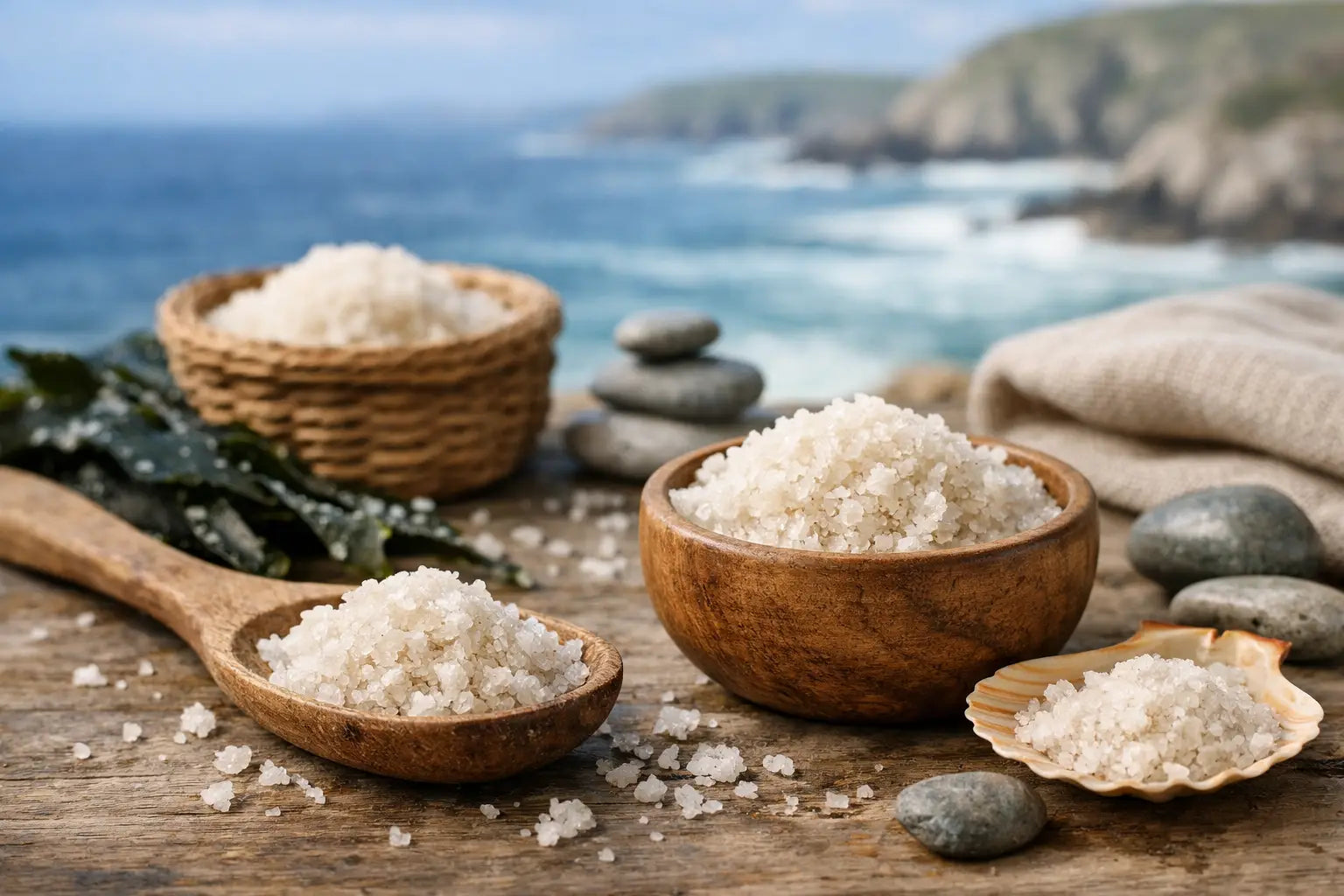
Celtic sea salt traditionally comes from coastal salt marshes in Brittany, France. Seawater is guided through shallow clay-lined ponds, where sun and wind help the water evaporate. The salt is then gathered by hand using traditional methods.
Its familiar grey colour comes from contact with the mineral-rich clay beds, rather than added colouring. It is often sold as coarse crystals or finer ground salt, and may feel slightly damp between your fingers. That natural moisture is part of its character.
Not every salt marketed with a Celtic-style name is produced in exactly the same way, so it is worth reading the label. Look for a product that clearly states its origin and ingredients. A quality salt should be just that: salt, with no unnecessary fillers, anti-caking agents or artificial additives.
How it differs from table salt
Table salt is generally mined or heavily refined, then fortified with iodine and treated to keep it free-flowing. It has a clean, sharp saltiness and dissolves predictably, which is useful in baking and everyday cooking.
Celtic sea salt has a more complex flavour and a less uniform texture. Because the crystals can be larger and retain some moisture, the salt may taste gentler when sprinkled over food. A few flakes on avocado toast, roasted kūmara, eggs or a tomato salad can bring out flavour without overwhelming the dish.
The mineral content is another point of difference. Celtic sea salt contains trace amounts of naturally occurring minerals, including magnesium, potassium and calcium. These amounts are usually small, so it is not a reliable source of minerals and should not replace a varied diet. Its real value is flavour, texture and a minimally processed approach to a kitchen essential.
There is also an iodine consideration. In New Zealand, iodised salt can help support iodine intake, particularly when dietary sources such as seafood, dairy, eggs and iodised bread are limited. Celtic sea salt is not usually iodised. If it is your only salt at home, make sure your wider diet meets your iodine needs, or alternate it with iodised salt where appropriate.
Celtic sea salt in everyday cooking
The best use for Celtic sea salt is where you can taste it. Think of it as a finishing salt first, especially if you have chosen a coarser variety. Add it at the end of cooking or just before serving, rather than using a heavy hand early on.
A small pinch can lift a bowl of porridge with banana and cinnamon, balance the sweetness of dark chocolate, or make homemade dressings taste more rounded. It is also lovely on grilled fish, buttered sourdough, roasted vegetables and simple soups.
Fine Celtic sea salt works well in marinades, sauces and cooking water, while coarse crystals are best crushed between your fingers over finished dishes. If you are baking, use the same measured amount called for in the recipe only when the salt has a similar grain size to the original. Coarse and fine salts do not always measure the same by volume, so weighing ingredients gives more reliable results.
A simple way to use it well
Keep a small pinch bowl or salt cellar near the stove, but use a spoon rather than dipping damp fingers into the container. This keeps the salt clean and helps preserve its natural texture.
Start with less than you think you need. Taste the food, then add another small pinch if needed. This is especially useful with naturally salty ingredients such as feta, olives, soy sauce, stock, bacon and smoked fish.
Is Celtic sea salt healthier?
Celtic sea salt is often described as healthier than table salt because it is less processed and contains trace minerals. That description needs a little context. All culinary salt is primarily sodium chloride, and too much sodium can contribute to high blood pressure for some people.
Your body needs sodium for fluid balance, nerve signalling and muscle function. The challenge is that many people get more than they need from packaged foods, takeaway meals, sauces and snack foods, before any salt is added at the table.
For most people, choosing Celtic sea salt is best viewed as a quality and flavour preference, not a health treatment. The same mindful approach applies whether you use sea salt, rock salt, pink salt or table salt: enjoy it, but keep the amount moderate.
If you have high blood pressure, kidney disease, heart concerns or have been advised to follow a lower-sodium eating plan, speak with your health professional about what suits you. Salt alternatives containing potassium may not be suitable for everyone either, particularly for people taking certain medicines.
Choosing and storing Celtic sea salt
Choose a salt that has a clean ingredient list and packaging that protects it from humidity. A little natural dampness is normal with Celtic sea salt, but it should smell fresh and clean, not musty.
Store it in an airtight glass or ceramic container away from steam and direct sunlight. If it clumps, gently break it apart with a spoon or mortar and pestle. Avoid storing it right beside a boiling kettle or on top of the oven, where moisture can affect the crystals.
It can also help to keep two salts in the kitchen: an iodised fine salt for recipes and regular cooking, and Celtic sea salt for finishing meals. This gives you the practical benefits of each without expecting one product to do every job.
Small rituals, sensible choices
Food rituals do not need to be elaborate to feel nourishing. Seasoning a home-cooked meal with a salt you genuinely enjoy can slow you down for a moment and encourage more attention to what is on your plate.
At Honest Skincare, we believe wellbeing is often built through these simple, repeatable choices - thoughtfully chosen ingredients, less fuss and care that fits into real life. Let Celtic sea salt bring texture and flavour to meals you already love, and let a light hand keep the ritual balanced.